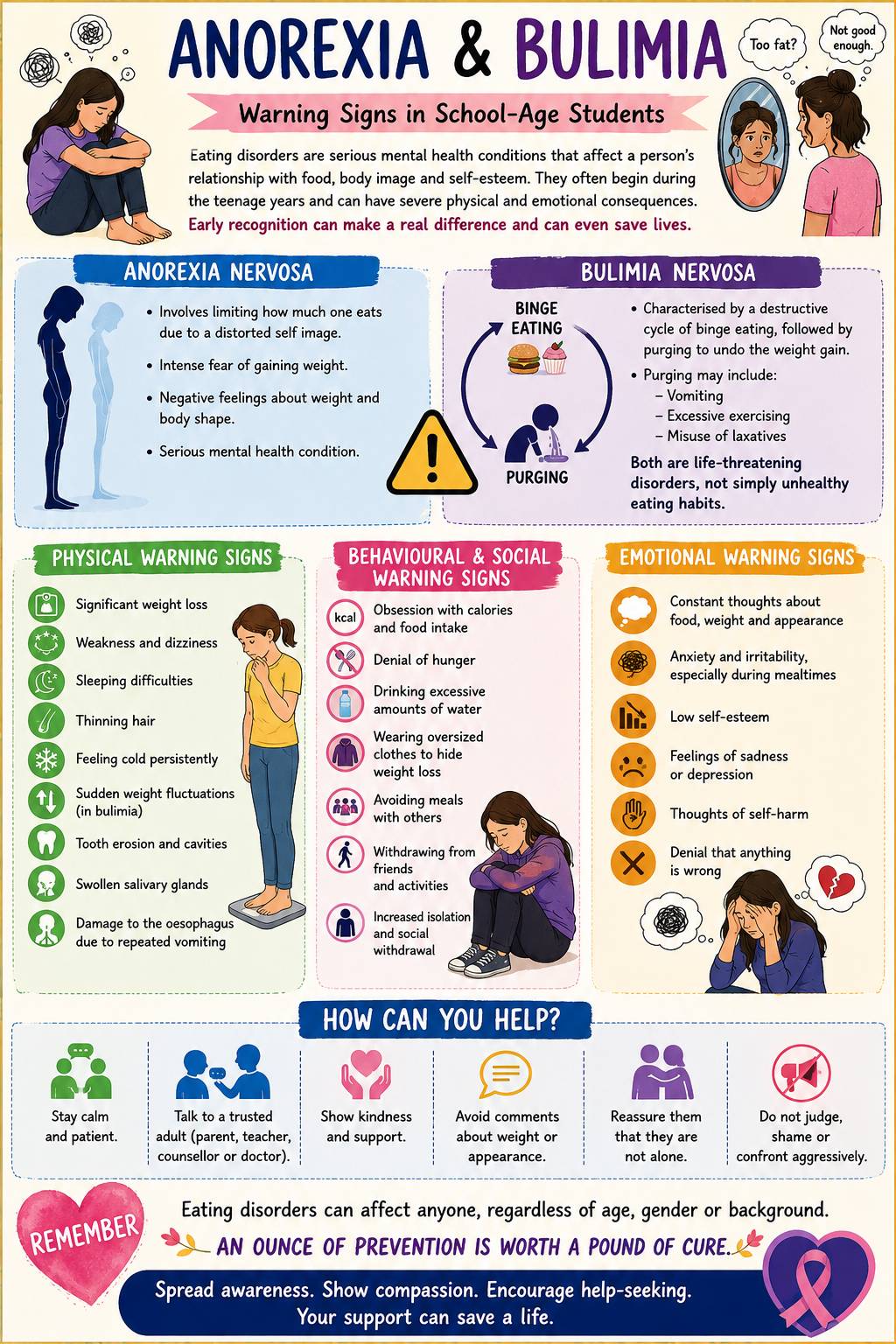
Every day, students walk into classrooms carrying battles that remain unnoticed. Eating disorders are one of the most dangerous hidden struggles that one goes through. There is a lot of misunderstanding regarding that as well. Conditions like anorexia nervosa and bulimia nervosa affect a large number of students and young people. Early recognition can make a real difference and can even save lives.
Anorexia nervosa is an eating disorder that involves limiting how much one eats due to a distorted self-image. It is a serious mental health condition that stems from negative feelings about weight and body shape and is usually caused by an intense fear of gaining weight. Bulimia nervosa is characterised by a destructive cycle of binge eating, followed by purging in order to undo the weight gain through vomiting, excessive exercising and often accelerated use of laxatives. Both these conditions are far more than bad eating habits; they are life-threatening disorders.
Physically, the signs of these disorders can be subtle at first but, over time, become impossible to ignore. A student is deprived of quintessential nutrients and may start to lose weight significantly. This is followed by weakening of the muscles and dizziness. They may also suffer from sleep problems, thinning of hair and feeling cold persistently. Students with bulimia may face sudden weight fluctuations because of constant overeating and purging. Repeated vomiting may cause tooth erosion and cavities, swollen salivary glands and even oesophageal rupture.
Behavioural and social changes are often noticed first by those around a person suffering from these disorders. They are in denial of their hunger and become extremely conscious of their calorie intake. Additionally, they consume large amounts of water to reduce hunger and start wearing oversized clothes to hide weight loss. Gradually, they distance themselves from friends and pleasurable activities, becoming increasingly isolated.
Emotionally and psychologically, people with eating disorders are trapped in an emotional spiral so much so that it completely clouds their thoughts. Despite being unwell, they may firmly deny that anything is wrong. Their mind is constantly preoccupied and they undergo anxiety and irritability especially during mealtimes. They also grapple with low self-esteem and thoughts of hurting themselves.
If one notices these signs in a friend, peer or someone they care about, they should not remain silent rather, act on it with patience and sensitivity. They should address the situation calmly by consulting an adult instead of directly confronting the person suffering. One should approach with kindness, refraining from any judgement on their weight and reassure them that they are not alone.
Eating disorders can affect people of all ages, genders and ethnicities. These disorders have been festering in silence for years. Therefore, spreading awareness is the need of the hour. It is important to foster an environment where such students are treated with compassion and are not ashamed of seeking help. An ounce of prevention is worth a pound of cure. By learning to recognise these warning signs, we can give these struggling students something they desperately need – the chance to get help before it is too late.
Rishika Agarwal
Class XII-C2.