
Why a Company's Sustainability Cannot Be Isolated from the World's
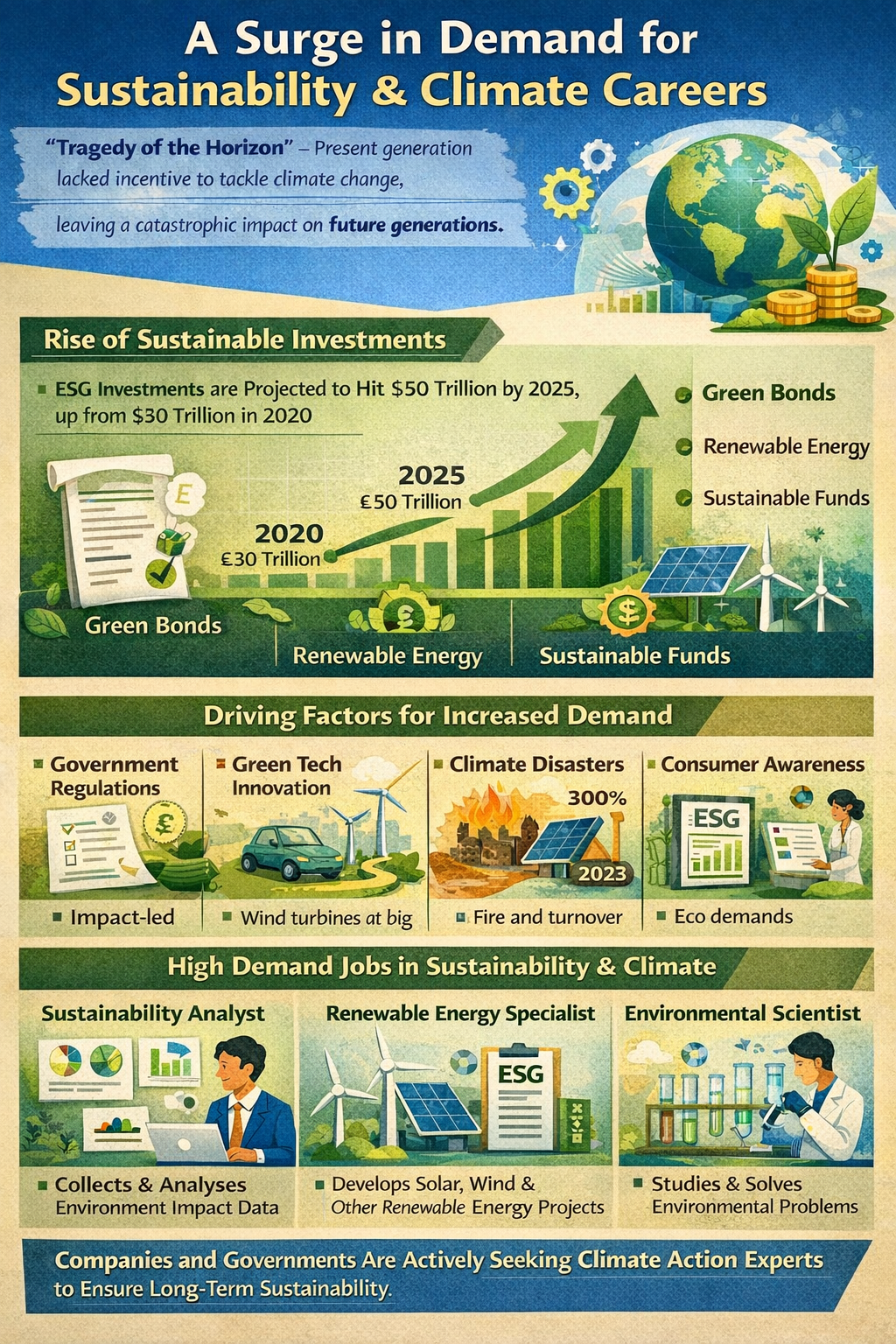
In 2015, Mark Carney, then Governor of the Bank of England, coined the term ‘Tragedy of the Horizon’ to describe the challenges of climate change. It talked about how the present generation had little to no incentive to work towards climate change and how that would have a catastrophic impact on the future generations.
There has been a common notion that sustainability is merely a voluntary activity which companies fulfil to maintain their goodwill in the market, thus companies focused on profit maximisation would have little to no incentive to hire professionals who can help reduce their environmental impact (making the job market for such professionals very limited.) Contrary to such beliefs, we have seen that today a company’s sustainability cannot be isolated from the world’s.
Take India’s BRSR (Business Responsibility and Sustainability Reporting). Implemented in 2023, it is a SEBI framework for India's top 1,000 listed entities to disclose ESG performance. As it is enforced under the SEBI (Listing Obligations and Disclosure Requirements) Regulations, 2015, non-compliance is treated as a violation of listing agreements, which can result in penalties, trading suspension, and in extreme cases lead to delisting. This is where sustainability analysts step in. Sustainable analysts are those professionals who collect data on the company’s current environment and social impact of functioning ranging from carbon emissions and waste water management to gender diversity in leadership roles and analyse this data to make recommendations about the key sectors in which the companies should work on. Thus, a confluence between sustainability and profitability has made this career highly demanded in the job market.
Another common myth is that sustainable practices are like a luxury which small enterprises cannot afford and adopting such techniques would put them at a competitive disadvantage in the market. While these may have been true a few decades ago, today the benefits and practicality of sustainability do not only target large corporations but also MSMEs. A perfect example would be the government’s Sustainable (ZED) Certification Scheme launched by the Ministry of MSME, which promotes "Zero Defect Zero Effect" manufacturing. It encourages MSMEs to adopt sustainable, eco-friendly processes, without compromising the quality of the products by providing various subsidies for upgradation of technology and product testing to actually innovate sustainable products. These policies act like business incubators for the small businesses and help in R&D for improving the quality of products. Aside from product development, policies like discount on freight charges further incentivises businesses to undergo sustainable practices as it provides a long term competitive edge to such enterprises. This type of entrepreneurship where sustainability is prioritised alongside sustainability is called green entrepreneurship.
It is evident that the need for sustainability in the world has been mirrored in government regulations. However, government regulations are merely broad mandates and goals which a company is compliant to achieve but the pathway to achieve such goals varies for each company. This is where careers in climate action become essential as they develop personalised plans of action to reduce a company’s environmental impact without compromise on the quality of production, making them highly demanded and lucrative careers today.
Avni Bhojnagarwala
Class XI-C2