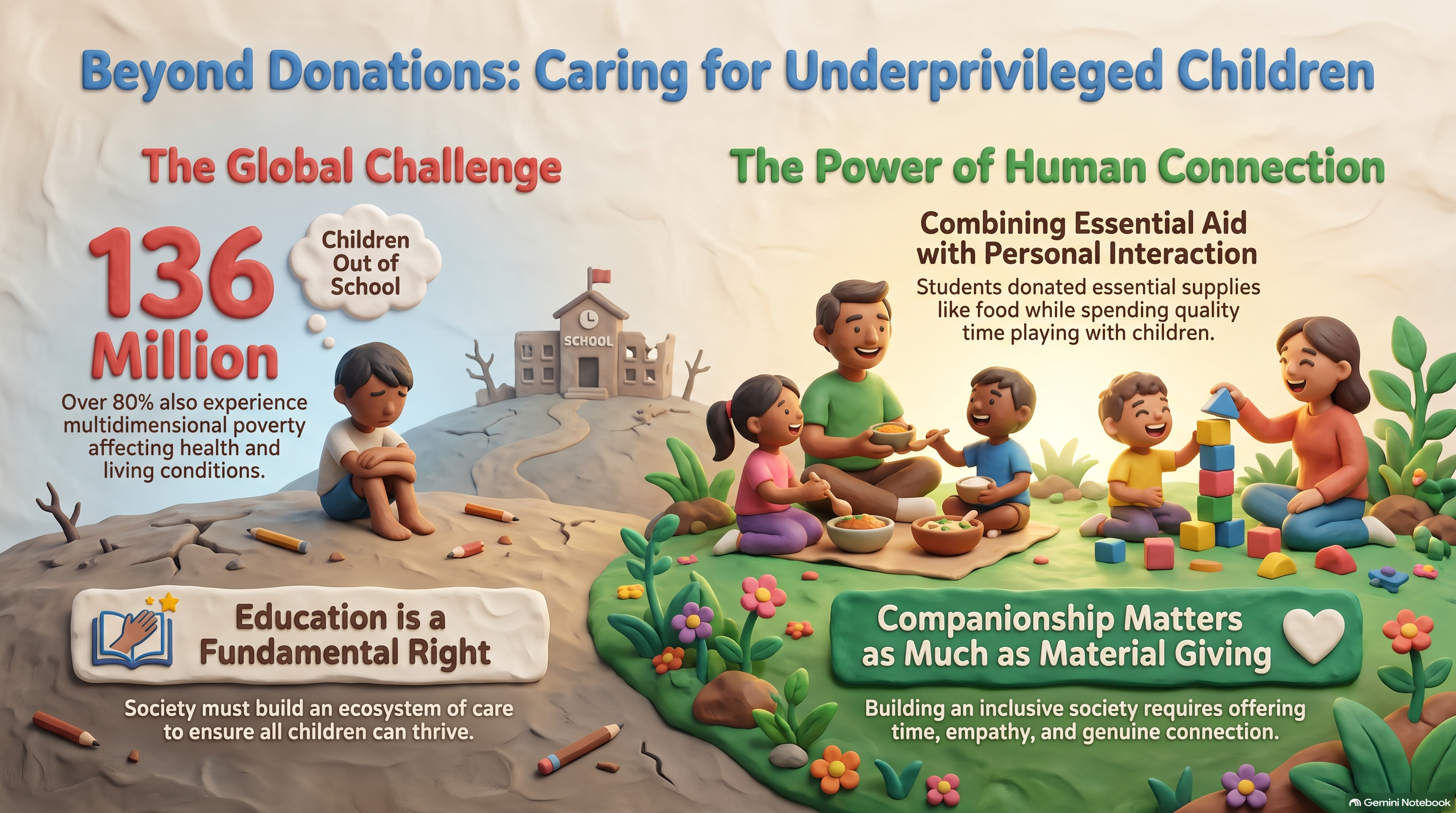
A classroom is where foundations are laid, dreams take flight and the promise of a brighter future begins to unfold. Yet for millions of underprivileged children, access to quality education remains an unfulfilled dream. According to the Global Multidimensional Poverty Index, 136 million school-age children worldwide are out of school, over 80% of whom also experience multidimensional poverty, affecting their health and living conditions. In India, educational opportunities that many take for granted remain significant milestones for countless families. This stark reality reminds us that education is not a privilege but a fundamental right and ensuring every child has the opportunity to learn, grow and thrive is a shared social responsibility.
Social responsibility towards children goes far beyond financial donations; it is about building an ecosystem of care, concern and collective responsibility where every child feels valued, supported and empowered to thrive. It begins with understanding their struggles, recognising their needs and taking meaningful steps to ensure that no child is denied the opportunity to grow, learn and dream. Across the world, countless children face challenges such as limited access to quality education, inadequate nutrition and the absence of a safe place to call home. The future of underprivileged children is shaped not by donations alone but by a society willing to care, understand and take responsibility.
At Sushila Birla Girls’ School, social responsibility is nurtured not just through lessons in the classroom but also through meaningful experiences beyond it. As part of this initiative, students visited Mother’s Nest Orphanage where they contributed essential supplies such as biscuits, rice and pulses recognising that even small acts of giving can make a meaningful difference in a child’s life.
However, the visit was about much more than donations. The students spent quality time with the children, playing Antakshari, identifying trees and plucking flowers, sharing moments of laughter and joy. The warmth of these interactions made the experience so memorable that the students were reluctant to return home. It was a heartfelt reminder that social responsibility extends beyond providing material necessities. It also means offering time, companionship and care.
Through such initiatives SBGS Moira Street encourages students to develop empathy, compassion and a sense of collective responsibility. The visit to Mother’s Nest demonstrated that while material contributions can help meet essential needs, the gift of human connection can be equally powerful. After all, building a more inclusive and compassionate society begins when we learn not only to give but also to connect, share and care.
Dishita Chatterjee – Class XI
Adrija Barua - Class XI