
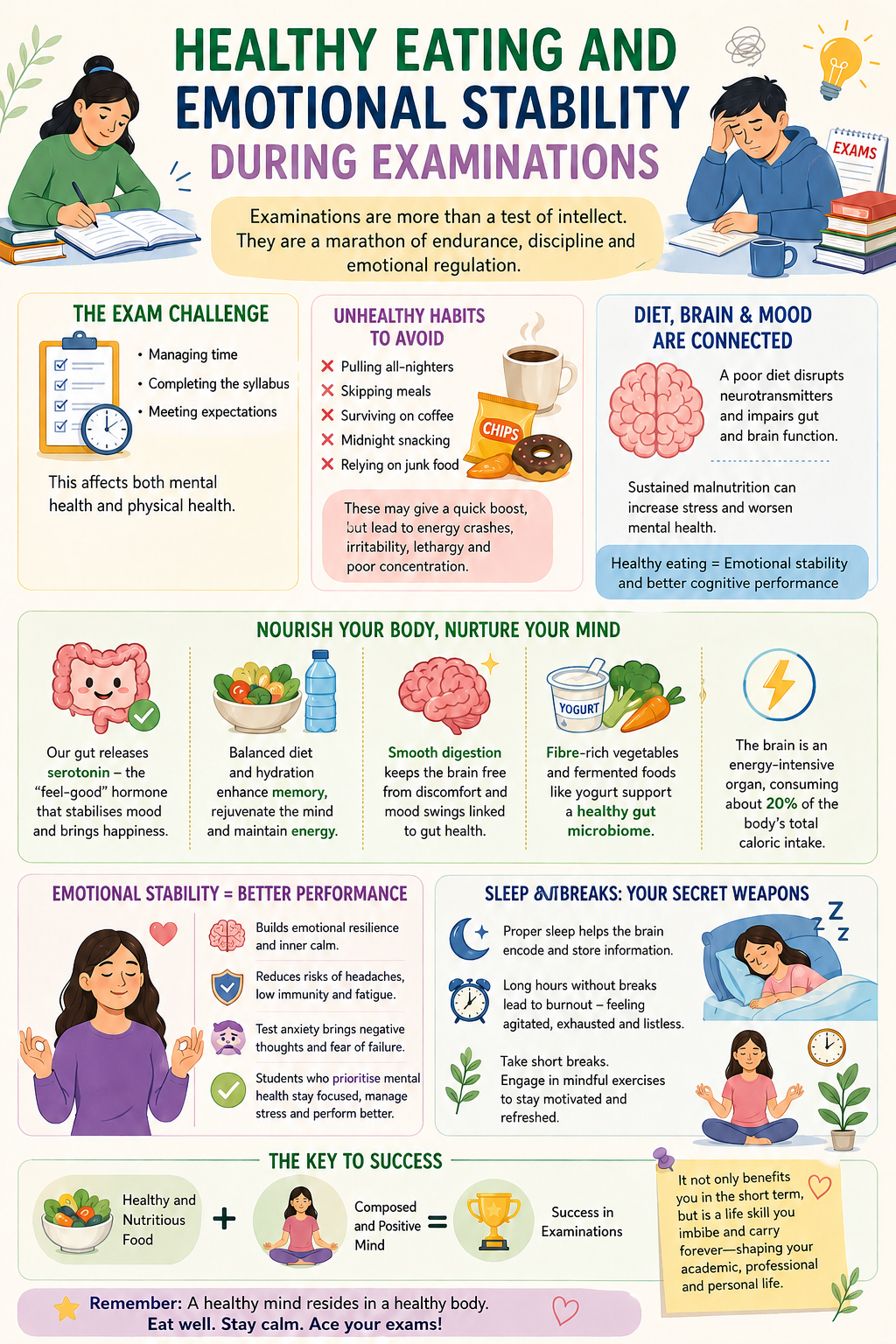
Examinations are viewed as a test of raw intellect. However, they are more than that. It is a marathon of endurance, discipline and emotional regulation. Though it is stressful, it is an integral part of a student's life. Students have to grapple with the problems of managing time, completing their syllabus and also meeting expectations. This not only affects their mental health buttheir physical health also goes for a toss.
When examinations approach, students often burn the midnight oil and they resort to unhealthy practices such as pulling all-nighters, skipping meals, surviving on coffee and midnight snacking. As a result, they tend to rely on junk food.We must realise there is a biological link between diet and our brain's ability to process stress and active learning. Maintaining healthy eating habits is not just about physical health; it is a critical strategy for emotional stability and cognitive performance. Inadequate intake of essential nutrients disrupts neurotransmitters and impairs our gut and brain function. Poor food choices such as processed food, sugary snacks and caffeine may give a sudden energy boost. However, it gradually pushes the body into a state of lethargy. This leads to frequent energy crashes, irritability and lack of concentration. During academic pressure, sustained malnutrition can compound stress levels and potentially trigger or worsen underlying mental health issues.
Our digestive system releases a hormone called serotonin which is responsible for mood stabilisation and happiness. Balanced diet and hydration are fundamental for students as they enhance memory, rejuvenate the mind and help maintain energy levels.When digestion is smooth, the brain is less likely to get distracted by physical discomfort or mood swings associated with gut health. Eating fibre-rich vegetables and fermented foods like yoghurt supports a healthy gut microbiome. The brain is an energy-intensive organ, consuming approximately 20% of the body's total caloric intake.
Examinations help bring out one's emotional resilience and inner calm. Stress can lead to various issues– headaches, low immunity and fatigue. Test anxiety occurs during these situations which leads to psychological and cognitive symptoms like negative thoughts and fear of failure. Students who prioritise mental health are able to stay focused and mitigate the adverse effects of negative emotions, improving their overall performance.
It may seem ideal to work through the night but scientists have, in fact, argued against this. It is highly recommended to get proper sleep as it is the time when our brain encodes and stores information. Long hours of studying without breaks lead to burnout – feeling agitated, exhausted and listless. It is important to take short breaks. Engaging in mindful exercises helps in maintaining one's enthusiasm and motivation throughout the examination period.
Examinations become the final test of mental fortitude, testing one's calmness and patience. We must not forget that a healthy mind resides in a healthy body. Hence, intake of healthy and nutritious food along with a composed mind is key to success in examinations.It not only proves to be beneficial in the short termbut also is something you imbibe and carry for a lifetime – shaping your academic, professional and personal life.
Rishika Agarwal
Class XII-C2