
Examinations induce stress and stress, in turn, can induce eating. As the pressure of mathematical formulas, approaching deadlines and endless revision begins to build, the mind may instinctively seek comfort in food rather than genuine nourishment. What starts as an innocent ‘munching’ break, can gradually become a coping mechanism with a bag of chips offering momentary relief from the anxiety of examinations. Food, ordinarily associated with nutrition and health can therefore become an unhealthy response to emotional distress.
For some, the urge to eat can become so overwhelming that even when the stomach is full the mind continues to demand more, much like Jean Grey or Vecna exerting control over people's minds. Yet this struggle has another extreme: while some students bury themselves under piles of snacks to cope with stress, others deliberately skip meals in the pursuit of ‘better focus’. Neither response provides a healthy solution. Instead, both extremes can have serious consequences turning the very pressure meant to motivate academic success into a threat to one's physical and mental well-being. At SBGS Moira Street, we recognise and empathise with our students who face such challenges during examinations. Through greater awareness and understanding, we hope to encourage healthier ways of managing stress fostering a balanced approach to both academic success and overall well-being.
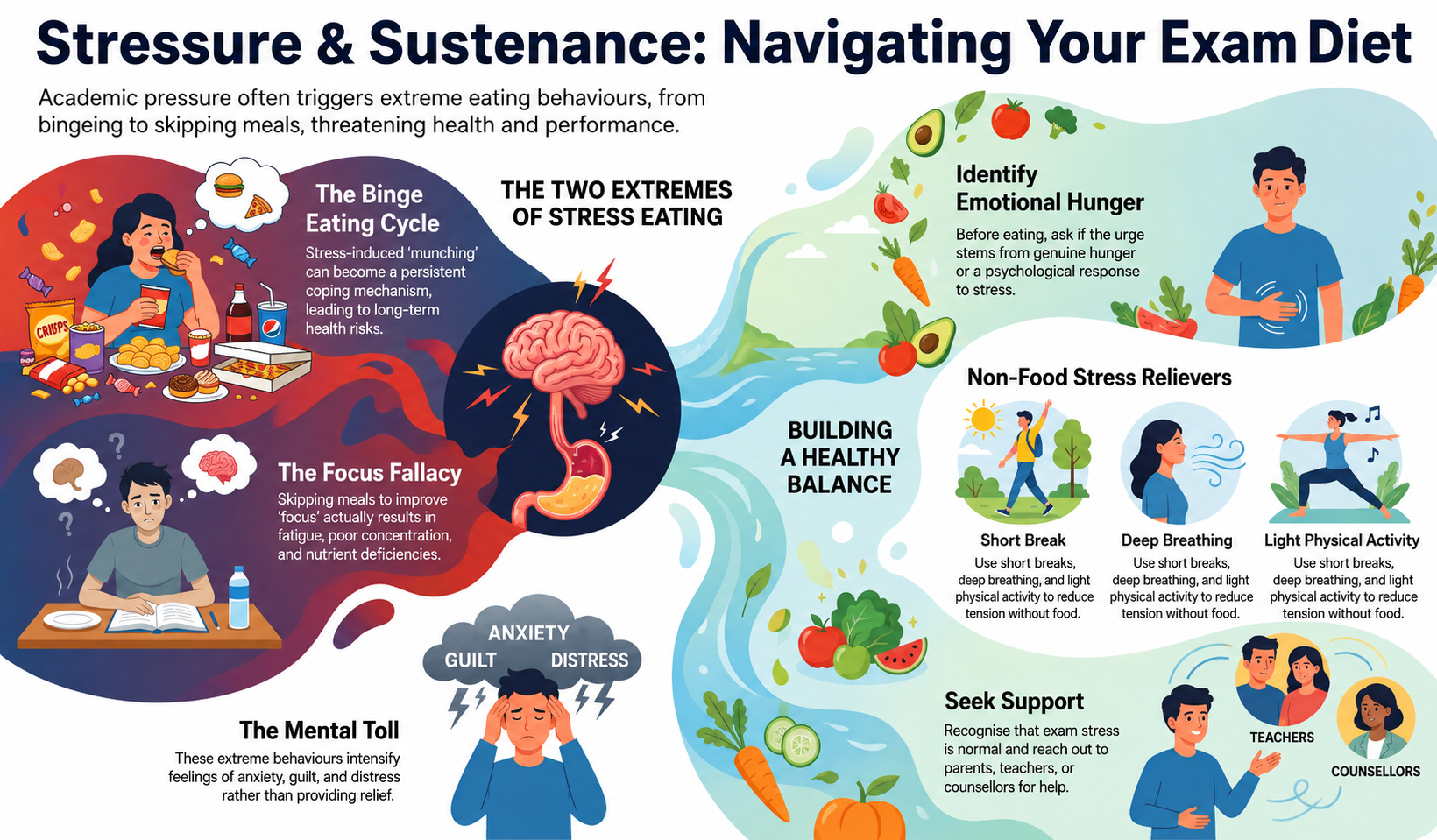
For some, the threat of binge eating can become overwhelming. Binge eating is an eating disorder that can be influenced by factors such as chronic stress, trauma, habitual patterns or attempts to cope with emotionally challenging situations. What may begin as occasional snacking can gradually develop into a persistent cycle of eating with food constantly kept within reach even during periods of inactivity. Over time, this behaviour can become difficult to break continuing even after the stressful situation that initially triggered it has passed. Persistent binge eating can contribute to obesity and increase the risk of health complications such as heart disease and diabetes. It can also take a significant toll on mental well-being potentially intensifying feelings of anxiety, depression, guilt and distress.
On the other hand, some students respond to academic stress by barely eating at all, sometimes limiting themselves to a single meal or even less throughout the day. While some may genuinely forget to eat amid the pressure and tension of examinations, consistently failing to consume enough food can leave the body and mind deprived of the energy they need to function. This can result in fatigue, poor concentration and nutrient deficiencies. Prolonged inadequate nutrition may weaken the immune system, contribute to muscle loss and in severe cases lead to malnutrition.
While binge eating during examinations may seem harmless in the moment, the potential health consequences can far outweigh the temporary satisfaction provided by poorly timed or excessive meals. Although moderation may be difficult during stressful periods, navigating a rough patch in life requires developing healthier ways to cope with it rather than seeking emotional comfort through food. Before reaching for another meal or snack, it is worth asking whether the urge stems from genuine hunger or is instead a psychological response to unrecognised stress. If the latter is true, binge eating is unlikely to provide lasting relief and may ultimately intensify both physical and emotional distress. Maintaining regular, balanced meals during examinations is essential. Short breaks, light physical activity, adequate sleep and simple relaxation techniques such as deep breathing can help reduce tension without relying on food. Students should also give themselves time to unwind through hobbies, music or conversations with friends and family. Most importantly, they should recognise that feeling stressed during examinations is normal and they should seek support from parents, teachers or counsellors when the pressure becomes overwhelming. By creating a healthy balance between studying, eating, resting and relaxing, students can approach examinations with greater focus and confidence. With the right habits and support, students can become true catalysts of positive change in the ever-evolving world.
Siddhiksha Majumdar
Asmi Banerjee
Vanshika Vaid