
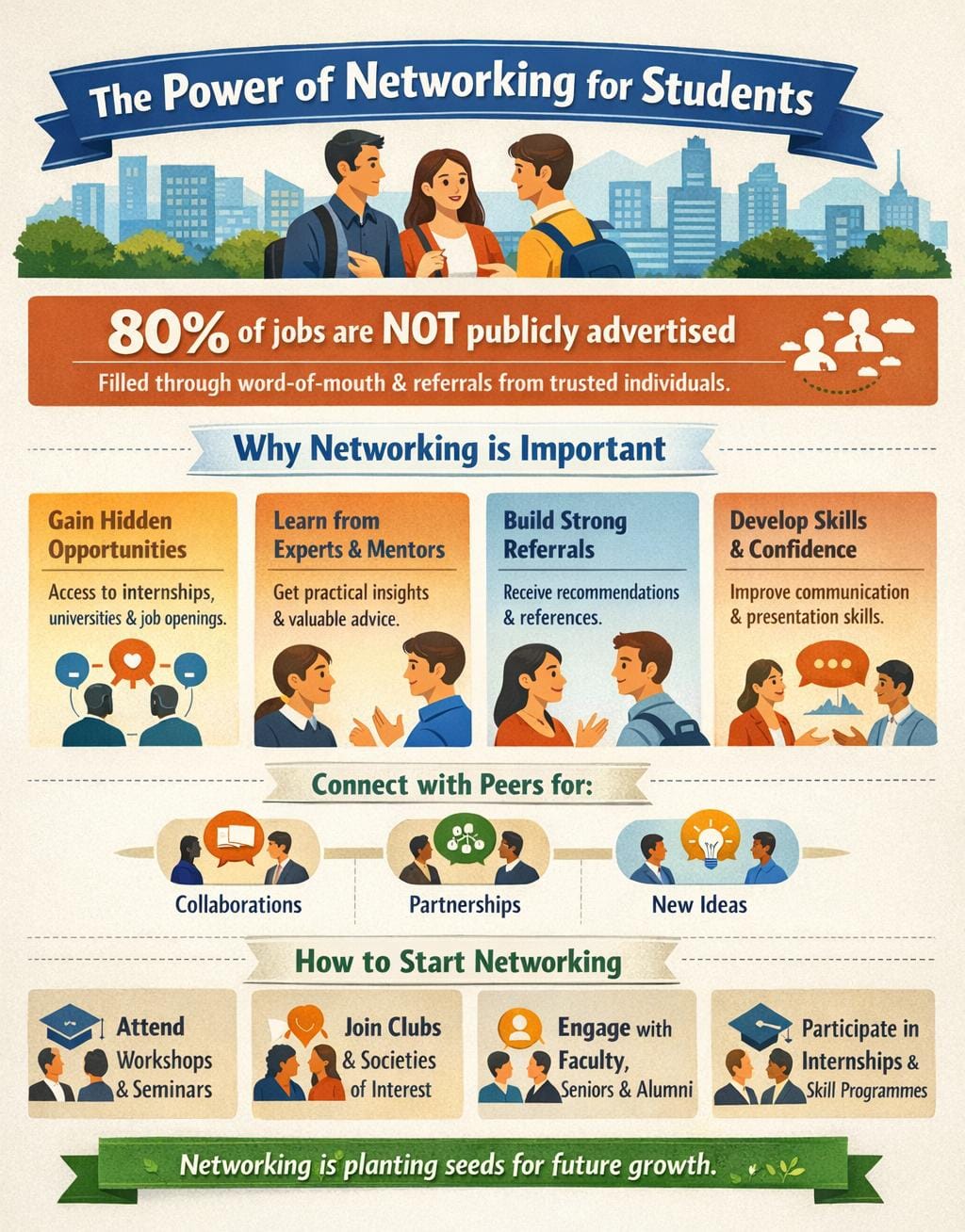
With the continuous evolution of education and career opportunities, networking has emerged as a pivotal factor that impacts one’s future to a great extent. Networking is the process of building connections with other individuals professionally or for career opportunities. In today’s tremendously competitive world, academic achievements and resumes no longer suffice to ensure a secured and successful career. Communication and collaborations can hence open new horizons and opportunities for individuals.
According to recent studies, about 80% of jobs worldwide are not advertised or made public. Rather, such opportunities are often circulated through word-of-mouth and are filled on the basis of recommendations from trusted individuals. Networking helps a student build strong referrals in advance, thus giving them a competitive edge. Recommendations from established individuals can help students land internships, universities or even full-time job positions.
Networking gives students a lot of exposure and introduces him/her to new career opportunities and unexplored ideas. Interactions and conversations with industry experts helps students get a real picture and reliable information about their field of interest. Moreover, it connects them to mentors who have traversed the path they aspire to follow. This offers guidance and advice based on experience which can prove to be of immense value in shaping their futures.
Connections built through networking can introduce students to peers having similar interests. This exposes them to varying perspectives and remarkable skill sets and motivates them to improve themselves and grow further. Networking can also give way to future collaborations and even partnerships. Regular interaction with diverse people develops students’ communication skills and confidence. It helps students learn how to present themselves before established individuals. Additionally, such interactions also expose students to people having different personalities, teaching them how to handle and deal with them.
Students can start networking by participating in workshops, seminars and other similar programmes. They can join clubs and societies of their areas of interest in order to connect with people having similar goals and ambitions. Further, students can regularly speak to their faculty, seniors and alumni. Participating in internships and skill development programmes can connect individuals to professionals in their field of interest. Building a strong LinkedIn profile which reflects one’s skills, undertakings and achievements helps students build a reputation amongst respectable individuals.
Networking is not about instant results. It is about planting seeds that grow over time. For students, starting early creates a foundation of confidence, collaboration, exposure and guidance. Every conversation adds to personal growth and future possibilities. In a world where talent is abundant but opportunities are limited, networking ensures that one’s skills are visible, valued and remembered.
Yashvvi Mehta
XI-S.