
The first word that comes to our minds when we think of athletics is ‘energy’…and trust me, if you have ever watched a sprinter explode off the blocks or an athlete soar through the air during a high jump, you will know exactly what I mean. Athletics is not just about running faster, jumping higher or throwing farther. It is about strength, stamina, grit, discipline and showing up every single day—even when your muscles are staging a full-blown protest and here is the thing most people forget - all that hard work needs fuel. You cannot expect a car to win a race on an empty tank and the same goes for athletes. Our young athletes at Sushila Birla Girls’ School Moira Street proudly participate in a wide range of sporting events, showcasing not only their talent and determination but also the values of discipline, teamwork and perseverance. As they strive for excellence both on the field and in the classroom, proper nutrition plays a vital role in supporting their growth, performance and overall well-being. This is precisely what spurred us to come up with SBGS Nutrition Guide – the secret weapon to their superpower!
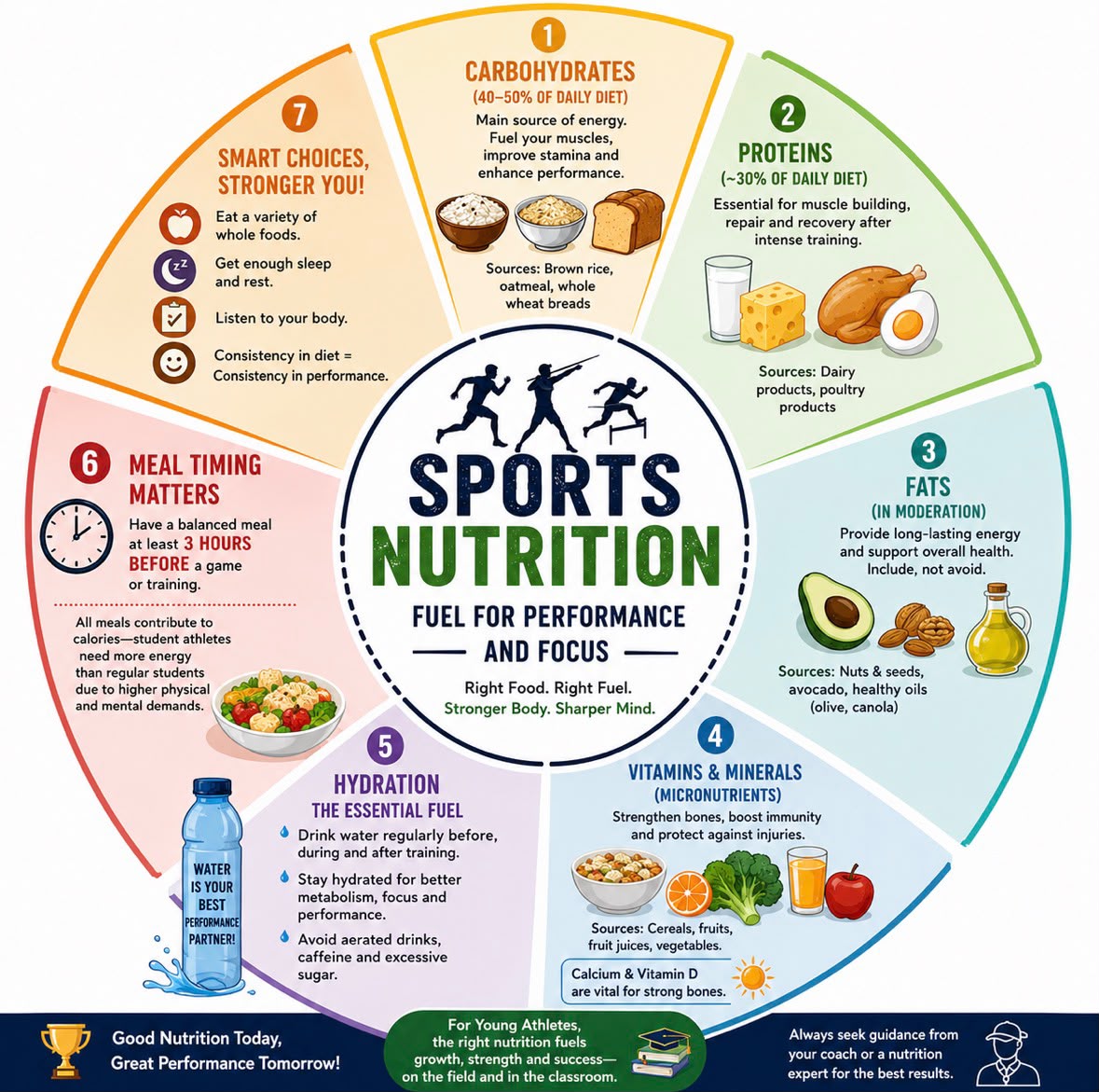
Young athletes require significant amounts of macronutrients, micronutrients and fluids to support their general growth and development as well as to provide the energy they require. These nutrients are obtained through healthy, balanced meals. Carbohydrates are the first and foremost nutritional requirement as they fuel the muscles during physical activity. They should constitute roughly forty to fifty percent of the daily diet. Carbohydrates can be obtained from sources such as brown rice, oatmeal and whole-wheat bread. Meals must also be rich in proteins which are essential for muscle building and sustaining long hours of physical activity. This can be achieved by including dairy and poultry products in the diet. Proteins should make up about thirty percent of a student athlete’s meal plan. The final macronutrient requirement is fulfilled by fats. Fats should not be consumed in excessive amounts but they should not be omitted from the diet either.
When it comes to micronutrients, vitamins and minerals play a crucial role in strengthening bones. Calcium and Vitamin D are vital for protecting the body from injuries. It is also important to include foods such as cereals, fruit juices and vegetables in the diet to improve stamina.
Water is an essential component of a student athlete’s meal plan and should be consumed regularly regardless of the time of day. Staying hydrated before, during and after training is crucial. Water is one of the most important components for maintaining proper metabolism and hydration. However, aerated drinks and beverages containing caffeine should be avoided as they can increase heart rate and blood pressure. Supplements such as salt tablets should also be strictly avoided by young athletes as they may lead to dehydration during practice. The best time to have a meal is at least three hours before a game or training session. All the meals consumed contribute to an athlete’s calorie intake which is generally higher than that of regular students. Thus, maintaining a proper diet is the key to sustaining both physical and mental strength. Healthy eating habits at SBGS is a reminder that champions are not made only by training hard - they are made by eating smart too!
Apurva Jain XII C2